Showing posts with label LOJMS. Show all posts

Friday, 24 March 2023

The Double Burden of Malnutrition Across the Lifecourse

Introduction

Nutrition plays an important role in shaping health from pre-conception to old age. The life cycle of humans begins with conception (pregnancy), fetal development, infancy, childhood and adolescence, and ends with adulthood [1]. Fetal development is the period of maximal growth, there is no recovery for growth failure at this stage because the fetus depends not just on the mother’s diet but also her reserves, hence, the need to supplement maternal diet during pregnancy with folic acid, vitamin D, iron, iodine, calcium [2]. The recommended protein intake during pregnancy is 60/day, carbohydrates should comprise 45-64% of daily calories while fat intake should comprise 20-35% of daily calories [3]. Recommended Dietary Allowance is the average daily level of intake sufficient to meet the nutrient requirements of nearly all (97-98%) healthy people [4] Infants should be exclusively breastfed for the first six months of life to achieve optimal growth, development and health [5]. At 6 months, breast milk will no longer be sufficient to meet an infant’s nutritional needs, hence, complementary feeding should be introduced [6] however, breastfeeding should continue until infant is at least 12 months of age [7].

Monday, 14 November 2022

Etiological Mirages of Acute Pneumonia

Abstract

Introduction: Modern AP concepts are focused exclusively on the infectious nature of the disease and the presence of certain pathogens. This belief determines the principles of treatment, the lack of effectiveness of which remains a concern of health professionals. The article presents a fragment of the study devoted to the etiology of АP.994 children aged 4 months to 14 years with various forms of so-called community-acquired pneumonia were examined and treated. Bacteriological examination of the material from the inflammation zone was carried out in 542 patients. Experiments on modeling АP and its pleural complications were performed on 44 animals. The obtained results and critical analysis of the literature data and scientific facts allow us to consider bacteria only as one of the etiological elements of АP, which is not mandatory in all cases of the disease. Scientifically based revision of existing ideas about the causes and mechanisms of AP development leads to the need for a radical change in the principles of treatment and is a strategic direction in solving the problem.

Read more about this article click on below URL: 

https://lupinepublishers.com/medical-science-journal/fulltext/etiological-mirages-of-acute-pneumonia.ID.000156.php.

Read more about Lupine Publishers Google Scholar Articles: https://scholar.google.com/citations?view_op=view_citation&hl=en&user=iR_dUf4AAAAJ&cstart=20&pagesize=80&citation_for_view=iR_dUf4AAAAJ:p2g8aNsByqUC

Saturday, 15 October 2022

Determination of Knowledge, Attitude and Behaviors of Pesticide Dealers and Applicators in Different Cities of Turkey


Abstract

Introduction: Biocidal products refer to the general name of substances used in order to prevent, control or reduce the harmful effects of hazardous organisms present in all areas of public health describing human settlements, working areas, physical places and environment related to daily living [1]. The use of biocidal product around the world is, on average, 3 million tons per year; this amount is 13.000 tons in Turkey.

Objective: Objective this study is to measure the knowledge, attitude and behaviors of Pesticide sellers and Pest Control Companies during February-May 2017 in the cities of Antalya (Aksu), Denizli (Center), Isparta (Center) and Ankara (Center).

Materials and Methods:This study was conducted in the cities of Antalya, Denizli, Isparta and Ankara during the months of February-May 2017 by means of surveys prepared to measure knowledge, attitude and behaviors of pesticide sellers and home pest control companies. In the survey study, 37 questions in total were addressed to pesticide sellers while 48 questions were directed to managers and workers in home pest control companies. Statistical significance value was accepted as p< 0.05. For statistical analyses and calculations, IBM SPSS Statistics 21.0.

Results: The average age of respondents was 36.77±10.73 years for home pest dusters and 37.50±9.74 for pesticide sellers. Pesticide sellers (86.7% was university graduate) were found to have higher education level in comparison to home pest dusters (53.3% was university graduate). When the questions of surveys were evaluated, average score of home pest dusters were defined as 64.69±7.79 whereas pesticide sellers scored 64.18±9.74 on average.

Keywords: Biocidal product; Pest control; Biocide poisoning; Agriculture

Read More About This Article follow the below URL:

https://lupinepublishers.com/medical-science-journal/fulltext/determination-of-knowledge-attitude-and-behaviors.ID.000154.php

Read more Lupine Publishers Google Scholar Articles: https://scholar.google.com/citations?view_op=view_citation&hl=en&user=iR_dUf4AAAAJ&cstart=20&pagesize=80&citation_for_view=iR_dUf4AAAAJ:XiSMed-E-HIC


Monday, 12 September 2022

Investigation 0f Surgical Nurses Knowledge and Practice Levels for Multimodal Analgesia


Abstract

Objective: This was a descriptive study with the aim of determining knowledge and practice levels of nurses working in surgical clinics for multimodal analgesia and its administration.

Materials and Methods: The study was conducted with 132 nurses working in the surgical clinics of three training and research hospitals. The data were collected between April and June of 2018 using the “Knowledge and Application Questionnaire on Multimodal Analgesia” developed by the researchers. The data were analyzed using number, percentage, and the Chi-square test.

Results: The mean age of the nurses who participated in the study was 37.5 years. Further, 47.7% had been working for 11– 20 years, and 60.6% had a bachelor’s degree. It was determined that 59.1% of the nurses did not receive any pain training, and 93.2% did not receive any education about multimodal analgesia. In the Knowledge and Application Questionnaire on Multimodal Analgesia, they obtained a score of 9.83 ± 2.38 points, which showed that the nurses’ knowledge and practice score for multimodal analgesia was moderate.

Conclusion: In this study, it was observed that the nurses were in need of knowledge about multimodal analgesia management and non-pharmacological interventions. It seems important that hospital administrators should initiate in-service training programs, including effective pain management and nursing interventions

Saturday, 5 February 2022

Lupine Publishers | Final Solution in Femoroacetabular Impingement - Threaded Cups in Hip Revision Surgery 2002-2012

 Lupine Publishers | LOJ Medical Sciences


Abstract

Purpose: Here, we report the complications of endoprosthesis with threaded cups according to our application in cases of complicated acetabulum (hip revisions and femoroacetabular impingement (FAI)).

Methods: A total of 504 patients was analyzed, including 189 men and 315 women. For re-implanted patients (n=49), the mean time to re-implantation was 6.3 years and the average age at re-implantation was 54.7 years. For censored patients (n=455), the mean time to censoring was 5.5 years and the average age of the implant was 55.7 years. Among the patients that were censored, 77 died and 378 patients did not experience an event necessitating re-implantation.

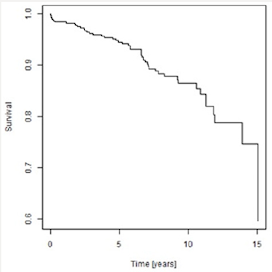
Results: For the total study population, the Kaplan-Meier estimate of 5-year survival is 0.94 and of 10-year survival is 0.85. 90% of the implants survived 7 years, 80% of the implants survived almost 12 years and 70% of implants survived almost 15 years. Kaplan-Meier survival analysis suggests that men have higher survival than women. Age of the patient at the time of implant was not a statistically significant factor for re-implantation (p value=0.21) but sex was (p value=0.02). Women had 2.25 times more risk of being re-implanted than men.

Conclusion: In our case series, the failure rate, as a result of aseptic loosening, was 7.4% (n=51). More than half the failure cases (56%) required re-implantation. Over one-third (37%) of the primary arthrosis cases, were found to be FAI, lessening the frequency of diagnosis of the former. In our clinic, the threaded cup seems to be indispensable in hip revision surgery and in treating FAI.

Keywords: Hip; FAI; Conclusion

Acknowledgements
This article does not contain any studies with human participants or animals performed by any of the authors.

Abstract


In our hospital, the most common indication for hip revision surgery is post dysplastic arthrosis, followed by femoroacetabular impingement (FAI), early progressive and deformative arthrosis of the hip joint and protrusio acetabuli, with cases of achondroplasia or deformative arthrosis in hereditary multiple exostoses being rarer but not uncommon. The cases of post dysplastic arthrosis represent developmental dysplasia of the hip (DDH), epiphyseal dysplasia, spondylo-epiphyseal dysplasia, and proximal femoral focal deficiency (PFFD) or neurogenic luxation of the hip. In our experience, a small portion of the patients requiring hip revision surgery have shown necrosis of the femoral head, manifesting from chondrolysis of the hip joint, from coxitis (including tuberculosis coxitis), from radiation therapy and from hemophilia. In addition, we noted over time, that a small portion of rheumatic patients were treated with the use of threaded cups.

In our experience, we have also noted that a portion of the patients who were treated with threaded cups experienced complications. The complication of posttraumatic arthrosis has not been uncommon, the conditions of which involve slipped capital femoral epiphyisis, acetabular fractures either treated conservatively or operatively, pseudoarthrosis after femoral neck fractures or fusion of the hip joint. Cancer patients have represented a distinctive group for postsurgical complications (including need for re-implantations). The types of cancers related to the original hip revision surgeries have been benign acetabular cysts, Hodgkin’s lymphoma, Ewing’s sarcoma, and giant cell tumor or desmoplastic fibroma in the supra-acetabular region. In our hospital, the ratio of primo-implantation to total implantations has been relatively low and that of re-implantations has been nearly one-third, making threaded cups irreplaceable in hip revision surgery at our institution.

In order to share the knowledge from our collective experience with hip revision surgery using threaded cups for diverse cases, we performed a systematic evaluation of the overall complications our patients have experienced from hip revision over a 10-year period (2002-2012).

Materials and Methods


In the 10-year period of 2002-2012, a total of 565 patients underwent hip revision surgery with threaded cups. Of those, 504 patients had complete data and were selected for analysis (189 men and 315 women). The total study population included 49 patients with re-implantation and 455 patients that were censored. For the re-implanted patients, the mean time to re-implantation was 6.3 years and the mean age at the time of implant was 54.7 years. For the censored patients, the mean time to censoring was 5.5 years and the mean age at implant was 55.7 years (Table 1). Among the censored patients, 77 died and 378 did not experience an event necessitating re-implantation.

Table 1: Descriptive statistics of time to event and age of the patient at the time of implant for the study population. Data are presented in years.


Among the total study population, 16.8% had indication for primary arthrosis. In general, those patients were relatively younger and with early progressive and deformative arthrosis of the hip joint, hip arthrosis with protrusion, and FAI. We also recorded the numbers of achondroplasia patients or deformative arthrosis in hereditary multiple exostoses. When we selected 100 patients from among the group of primary arthroses cases, 37% were found to be FAI, indicating that FAI is secondary arthrosis in origin.

Figure 1: Representative case of high iliac luxation – Hartofilakidis Type III, Crowe Type IV, Eftekhar Type D hip dysplasia, solved with bilateral endoprosthesis (THR) and having visible difficulties with stem implantations.


Patients with post dysplastic arthrosis were the largest group among the hip revision surgery cases (60.3%). These cases included DDH, epiphyseal dysplasia, spondylo-epiphyseal dysplasia, and PFFD or neurogenic luxation of the hip representing nearly every type of difficult anatomical acetabulum for restoration of true acetabular region or for re-lengthening of the lower extremities (Figure 1). Among the total study population, 10.4% had indication of necrosis of the femoral head. These cases consisted of such conditions as chondrolysis of the hip joint, following coxitis (including the stages after tuberculosis coxitis), or necrosis resulting from radiation therapy or in relation to hemophilia (Figure 2).

Figure 2: A patient requiring hip revision surgery following septic coxitis with necrosis of the head of the femur. The patient underwent THR. (a) 3-months post-operative. (b) 6-months post-operative. (c) Aseptic loosening of the cup detected at 9 months follow-up. (d) Re-implantation with larger cup.


Rheumatic patients in our study population had received longterm corticoid therapy; among these patients, osteoporosis and necrosis of the femoral head is common. The threaded cup was used in 3.2% of this study subgroup. The rheumatic patient group also included several cases of ankylosing spondylitis (also known as Bechterev’s disease) and juvenile rheumatoid arthritis. Regarding the difficult anatomical acetabulum of these cases, 7.7% of the patients implanted with threaded cups experienced posttraumatic arthrosis, the conditions of which involved slipped capital femoral epiphyisis, acetabular fractures either treated conservatively or after osteosynthesis, pseudoarthrosis after femoral neck fractures or conditions after posttraumatic arthrodesis of the hip joint.

Among the total study population, rare indication was oncological status (1.6%). Such cases consisted of benign acetabular cysts, Hodgkin’s lymphoma, Ewing’s sarcoma, giant cell tumor or desmoplastic fibroma in the supraacetabular region. When we compare threaded THR primo-implantations to total number of primo-implantations at our institution in the 10-year study period, there was an average 13.1% of primo-implantations. The same comparison for the re-implantation group showed that we used the threaded THR 27.2% on average, making this treatment modality indispensable in hip revision surgery at our institution.

Figure 3: Representative case of cup breakage due to loss of bone in the supero-lateral part of the acetabulum affected with metastatic process.


We noticed aseptic loosening of the cup in 48 cases, of which 18 cups loosened after primo-implantation and 29 loosened after re-implantation, giving a failure rate of over one-half (56%). This high percentage is largely due to the area of implantation being technically difficult, which necessitated the use of a different device (i.e. the threaded cup); the rest represented failure of the cups after acetabular fractures (2 cases) and after metastatic affections surrounding the acetabulum (2 cases). Dislocations of the THR occurred in 4.4% (30 cases) of the study population, and 15 of the cups required operative intervention. In 5 cases, open reduction was enough; in 9 cases we re-implanted the inlay or head with one of a bigger size, and in 6 cases we performed re-implantation of the stem or cup to correct the position of the implant.

There were infectious complications in 3% (21 cases) of the study population. In 17 of those cases, a revision procedure was required, including 5 revisions to address an early superficial infection and 2 revisions for deep infection. Proper drainage with retained implant was achieved in all cases. A total of 13 patients remain in follow-up to date, including 3 patients with chronical fistulation, 8 patients who underwent two-stage re-implantation of the THR, and 2 patients who underwent implant removal and had no further re-implantation.

There was slow migration of the implant into the pelvis or up into the iliac bone without obvious loosening in 2.3%. This migration is likely explained by loosening of the circumferential grip of the cortical bone, when the anterior and/or posterior acetabular wall is weakened. In such a condition of cortical weakening, the underlying cancellous bone does not have enough mechanical strength and thus the cup migrates (Figure 4).

Figure 4: Representative case of slow migration up into iliac bone, with loosening at 8 years after the primary implantation.


Graph 1: Kaplan-Meier survivor analyses.


Considering the threaded cup concept, we have observed stress shield effect often. Since the stress shield exerts its effect in cup migration, focused follow-up is necessary to obtain meaningful findings. The advantage of a threaded cup is that there is no need of full coverage. In particular, 70% of coverage is sufficient, without need of augmentation [1]. In addition, arthritis with protrusion (FAI pincer type) is one of the indications for the threaded cup since those cases do not need support of the acetabular floor. Implantrelated complications are to be considered as neuro-vascular complications. Among our study population, there was a total number of 10 nerve palsies (1.5%), 4 of which had to be operated; two of those patients underwent sural graft transplantation due to femoral nerve cutoff, [2] and the other two underwent the same procedure for static nerve palsy, with one requiring simultaneous anterior tibial tendon transfer. In one case, we released the lateral cutaneous nerve (Graph 1). The Kaplan-Meier survical curve suggests that men have higher survival than women do (Graph 2).

Graph 2: Kaplan-Meier survivor curve for men and women, showing the association of time to event to sex.


Age of the patient at the time of implantation was not statistically significant (p value = 0.21). Sex was a statistically significant factor (p value 0.02). Women had 2.25 times more risk of being re-implanted than men (Table 2).

Table 2: Cox model of proportional hazard for patient sex, showing dependence of time to event with age at the implant and sex.


Conclusion

 Aseptic loosening reportedly occurs in around 6.5% of implanted patients at 4 years following placement [3]. In one study the radiological sign of instability was found in 21% of patients (n =130) at a mean follow-up of 3.9 years [4]. In another study [5], 17 cups (accounting for 25% of the cases assessed) were revised at an average of 5.2 years, with another 9 additional cases awaiting revision. Brujin et al. [2] reported migration for 25% of threaded cups in a follow-up of 4.5 years, and a 6% revision rate. It has been suggested that high and continuous stress near the threads may not allow bony in-growth [6] and may produce ischemia and necrosis [7] that require surgical revision in 14 months following the implantation surgery [8].

Discussion

Overall, 7.4% of our patients experienced loosening of the threaded cups and 3% experienced infectious loosening, which agrees with the literature [9,10]. In general, loosening of threaded cups does not give a good clinical and/or radiological outcome over the long term. X-ray appearance deteriorates with time, without evidence of an initial clinical correlation. The appearance of relative lines does not necessarily equate to the occurrence of loosening, but such a finding should be monitored carefully thereafter. Detection of osteolysis, however, indicates that loosening will occur [11]. A study by Harris et al from 1986 indicated that 79% of coxartosis cases originated from the cam impingement, with the rest by rheumatoid arthritis (21%) and hemochromatosis (10%).

In our series, when we compared 100 patients admitted for the THR procedure, 37% showed FAI signs, with the average age of implantation being 58 years old. There were 23% post-DDH cases, 11% idiopathic avascular necrosis, 17% post-trauma cases, and 12% others; thus, the diagnosis of primary arthrosis is much less common. FAI both types are finally resolved by a THR and indicated much earlier than primary arthrosis. As changing in orientation of the acetabuli we use these threaded cups, [12] more in pincer type of the FAI, where orientation is essential. We don’t necessarily use these cups, though in special cases we have to prefer primary stability to have good long-term results. The failure of the threaded acetabular component is due to difficulties of anatomy of the acetabulum, as observed in the cases in which we used this component.

Even though we decided to use this special design of threaded cup, despite its higher rate of complications, we were able to resolve one-third of our re-implantation cases and to overcome the difficulties of the acetabulum in FAI [13,14]. Kaplan-Meier survival curve analyses identified threaded cups as a good option (with survival of 10 years); the Cox proportional curve indicated higher risk for re-implant for women. Even though we investigated THR as a last option for patients with FAI, pelvic transfers or any cervicocapital remodeling may also represent last options. Ultimately, this study did not show the threaded cup to be ideal for complicated acetabulum, though in our clinic it is ideal for this diagnosis.

Read More Lupine Publishers Medical Sciences Journal Articles: https://lupine-publishers-medical-sciences.blogspot.com/


Tuesday, 11 January 2022

Lupine Publishers | Heart-Lung Machine: Seven Decades of Challenging Work

 Lupine Publishers | LOJ Medical Sciences


Opinion

Heart-lung machine (HLM), also called oxygenator pump or cardiopulmonary bypass (CPB) pump (Figure 1), aims to provide extracorporeal circulation (ECC) with maintenance of oxygenated blood flow to the body organs when the device is connected to the arteriovenous system. The HLM is an essential component of openheart surgery to bypass the circulatory system of the heart and lungs, termed CPB. The main principle is to draw the blood from the major veins (venae cavae) to an oxygenator in the HLM where it is re-oxygenated, and then pumped into the arterial system (ascending aorta). Additionally, the myocardial contractility during CPB can be halted by running a cardioplegic solution containing potassium citrate. The initial concept to constitute an artificial circulation and hence CPB was stated in the 19th century on the basis that the contractility of muscle could be restored by perfusion of an oxygenated blood under pressure to enable better perfusion of isolated organs. Therefore, there was a need to develop an artificial heart-lung system to perfuse an oxygenated solution without interruption of blood flow, which became a real in the beginning of the 20th century after discovery of the ABO blood group system to reduce inconveniences of incompatibility, in addition to discovery of heparin to inhibit coagulation [1].

Nowadays, no one can ignore the great clinical role of heartlung machine (HLM) in the development and progress of cardiac surgery, since the first successful clinical use of CPB by John Gibbon Jr on 1953. The practical routine uses of CPB for open heart surgery began in 1955, thanking to the efforts of John Kirklin and Walton Lillehei [2]. Thereafter, many technical and practical advances occurred in HLM and perfusion science in line with advancements in anesthesia and cardiac surgery, to reach about seven decades after its first clinical application with contemporary important developments and promising future. Since its incorporation for cardiac surgery, subsequent important developments have been driven to HLM and CPB. The improvements allowed an increase in the operative time, better myocardial protection, and extension of open-heart surgery to include patients at extreme age or those who have inoperable conditions [3]. The oxygenators of HLM have passed by many transitions from disposable biologic oxygenators in 1960s, to microporous polypropylene oxygenators in 1970s, hollow-fiber oxygenators in 1980s and 1990s, nonporous true diffusion membrane in 2000s, and more recently screen microfilters to eliminate the need for a separate arterial line. The initial Sigmamotor finger pumps arterial pumps were replaced by roller pumps, centrifugal pumps, and pulsatile mode pumps. In addition, the technical advances in HLM and CPB include improvements in arterial cannulation, venous drainage and cannulation, temperature management, anticoagulation therapy, hemofiltartion, organ preservation, brain protection, and monitoring [4].

The developments in the ECC technology, particularly the use of centrifugal pumps and nonporous true diffusion membrane, lead to development of partial CPB termed extracorporeal membrane oxygenator (ECMO) to prolong life-support systems for patients with heart and/or lung failure [5]. Currently, ECMO is used as a technique to treat critically ill patients with cardiogenic shock and cardiac arrest, to obtain worldwide use of ECMO further improvements in circuit design, oxygenator technology, and portability are required [6]. Despite seven decades of continuous improvements in ECC and HLM, the device was not without its faults because of the possible complications related to inflammatory response, hemodilution, coagulation abnormalities, cerebral dysfunction, and endothelial damage. Multiple strategies have been introduced to reduce the severity of the associated systemic inflammation and organ dysfunction, including anti-inflammatory drugs, novel pharmacologic components of the CPB, and modified surgical techniques, but the efficacy of these strategies is controversial [7,8]. To avoid the unfavorable consequences during coronary artery bypass grafting (CABG), exclusion of CPB namely off-pump coronary artery bypass (OPCAB) have been advocated and widely used since its introduction on 1990s [3,9].

Despite the theoretical benefits of OPCAB in reduction of myocardial injury, stroke, neurocognitive impairment, and cardiac mortality, comparisons of OPCAB with on-pump CABG showed favorable short-term and doubtful long-term outcomes. In comparison to on-pump CABG, the benefits of OPCAB regarding reduced need for blood transfusion and reduced postoperative hospital stay may be outweighed by the risk of incomplete ineffective revascularization, with current decline in the worldwide rates of OPCAB [9]. A debate remains regarding the use of HLM as it is an essential element of cardiac surgery, but its use is still faced by some limitations which may constitute more challenges for future investigations. In other words, CPB has a rapid evolution since the clinical introduction of HLM until the current remarkable safety but its perfection is still pending.

In conclusion, invent of HLC with development of CPB constitute the real breakthrough for cardiac surgery. Through approximately seven decades, the clinical evolution of HLM and CPB with a reduction of its early complications encouraged the performance of more cardiac procedures and the involvement of more population in open heart surgery including those with comorbidities and advanced age. However, the complications of CPB remain possible in relation to the associated hemolysis and inflammatory response which indicates more future work to eliminate any intricacy.

Read More Lupine Publishers Medical Sciences Journal Articles: https://lupine-publishers-medical-sciences.blogspot.com/


Thursday, 25 November 2021

Happy Thanksgiving!


When we think about gratitude there are so many opportunities to appreciate life! Research shows that people who reflect upon the things they're thankful for are both happier and healthier. Today we reflect upon the blessings you bring to us. Happy Thanksgiving to all!! 

From our LOJ Medical Sciences (LOJMS)


The Body Electric: Humans Have A ‘Force Field’ Around Their Bodies

  Abstract Bioelectronic medicine (BEM) is the most recent medical revolution — not an innovation or an improvement or a step up but a radic...